CONTENTS
Tune in on Apple Podcasts or Spotify.
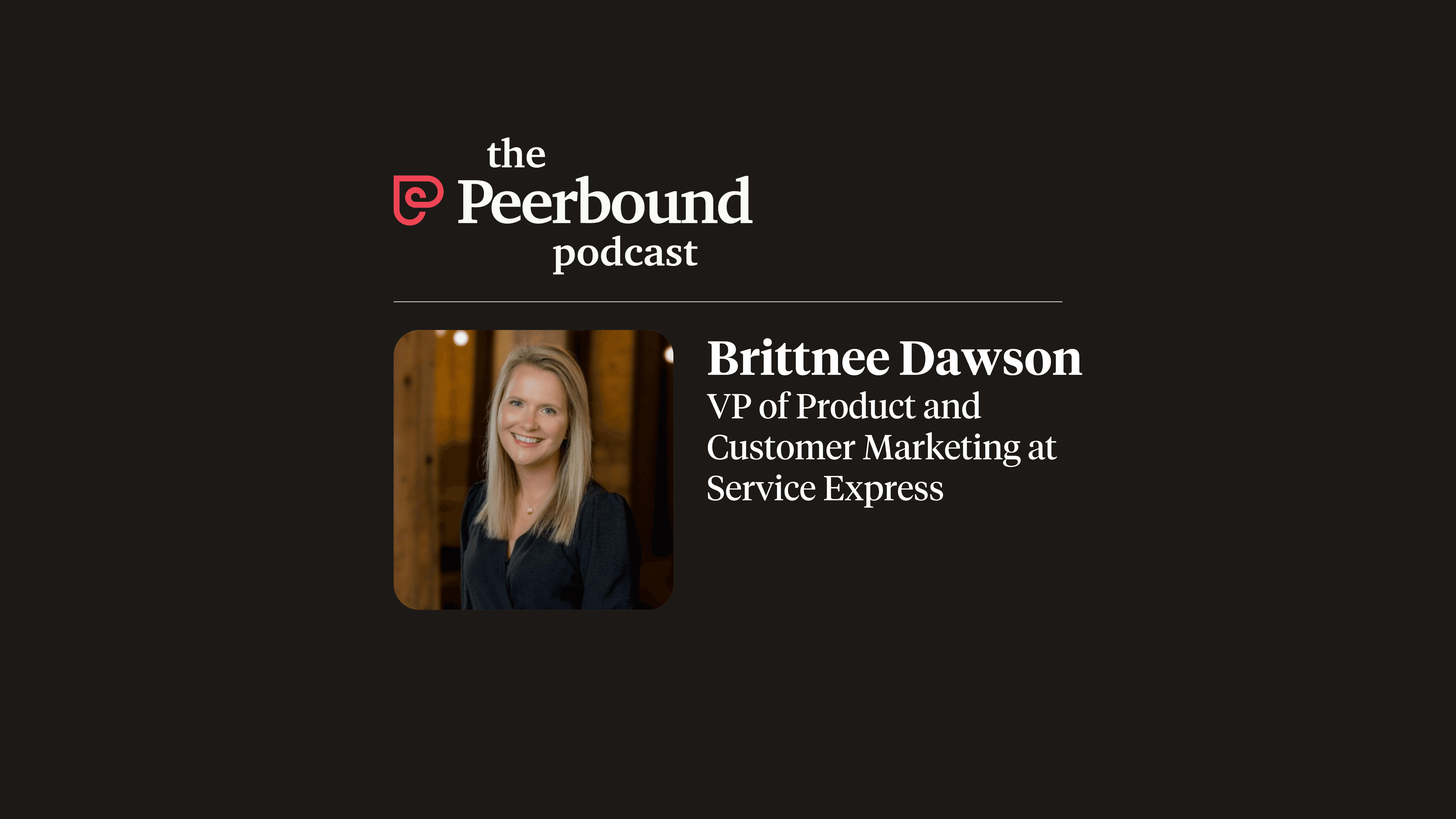
In this episode of The Peerbound Podcast, Sunny Manivannan sits down with Jess Walker McFarland, a customer marketing and advocacy leader with experience at BMC, Splunk, and Rubrik. Jess was at Rubrik through their IPO and shares what she learned along the way.
Tune in on Apple Podcasts or Spotify.
In this episode of The Peerbound Podcast, Sunny Manivannan sits down with Jess Walker McFarland, a customer marketing and advocacy leader with experience at BMC, Splunk, and Rubrik. Jess was at Rubrik through their IPO and shares what she learned along the way.
Tune in on Apple Podcasts or Spotify.
In this episode of The Peerbound Podcast, Sunny Manivannan sits down with Jess Walker McFarland, a customer marketing and advocacy leader with experience at BMC, Splunk, and Rubrik. Jess was at Rubrik through their IPO and shares what she learned along the way.
Tune in on Apple Podcasts or Spotify.
In this episode of The Peerbound Podcast, Sunny Manivannan sits down with Jess Walker McFarland, a customer marketing and advocacy leader with experience at BMC, Splunk, and Rubrik. Jess was at Rubrik through their IPO and shares what she learned along the way.
Know Your Top Customer Advocates
Jess's advice on IPO readiness is straightforward: always know who your top customer advocates are.
"Who are your top customer advocates? Whose story would you bring forward at one of the arguably most pivotal moments in a company's history? Having that list in your head, or even written down, is a good thing to always keep in the back of your mind."
When you're preparing for an IPO, your audience shifts. You're no longer talking to buyers. You're talking to investors.
"Your audience at this point is not a buyer of your product. The audience is the finance community, or somebody who's an investor looking to spend their retirement savings in your organization. Take this seriously, be able to explain clearly — this is what you do, this is the benefit."
Jess's advice on IPO readiness is straightforward: always know who your top customer advocates are.
"Who are your top customer advocates? Whose story would you bring forward at one of the arguably most pivotal moments in a company's history? Having that list in your head, or even written down, is a good thing to always keep in the back of your mind."
When you're preparing for an IPO, your audience shifts. You're no longer talking to buyers. You're talking to investors.
"Your audience at this point is not a buyer of your product. The audience is the finance community, or somebody who's an investor looking to spend their retirement savings in your organization. Take this seriously, be able to explain clearly — this is what you do, this is the benefit."
Jess's advice on IPO readiness is straightforward: always know who your top customer advocates are.
"Who are your top customer advocates? Whose story would you bring forward at one of the arguably most pivotal moments in a company's history? Having that list in your head, or even written down, is a good thing to always keep in the back of your mind."
When you're preparing for an IPO, your audience shifts. You're no longer talking to buyers. You're talking to investors.
"Your audience at this point is not a buyer of your product. The audience is the finance community, or somebody who's an investor looking to spend their retirement savings in your organization. Take this seriously, be able to explain clearly — this is what you do, this is the benefit."
Jess's advice on IPO readiness is straightforward: always know who your top customer advocates are.
"Who are your top customer advocates? Whose story would you bring forward at one of the arguably most pivotal moments in a company's history? Having that list in your head, or even written down, is a good thing to always keep in the back of your mind."
When you're preparing for an IPO, your audience shifts. You're no longer talking to buyers. You're talking to investors.
"Your audience at this point is not a buyer of your product. The audience is the finance community, or somebody who's an investor looking to spend their retirement savings in your organization. Take this seriously, be able to explain clearly — this is what you do, this is the benefit."
The IPO Experience
At Rubrik, Jess led customer advocacy and executive programs, including establishing the customer advisory board and executive briefing program. She was there through the company's transition from backup and recovery to data security to cyber resilience, and had to evolve customer stories along with that shift.
Being part of the IPO process was a career highlight. As Jess describes it:
"IPO readiness is something I will remember. Being on that team and working with legal, finance, the banks — I feel like I almost got an MBA throughout that process. To have a front row seat to that is one of my biggest capstone moments in my career for sure."
At Rubrik, Jess led customer advocacy and executive programs, including establishing the customer advisory board and executive briefing program. She was there through the company's transition from backup and recovery to data security to cyber resilience, and had to evolve customer stories along with that shift.
Being part of the IPO process was a career highlight. As Jess describes it:
"IPO readiness is something I will remember. Being on that team and working with legal, finance, the banks — I feel like I almost got an MBA throughout that process. To have a front row seat to that is one of my biggest capstone moments in my career for sure."
At Rubrik, Jess led customer advocacy and executive programs, including establishing the customer advisory board and executive briefing program. She was there through the company's transition from backup and recovery to data security to cyber resilience, and had to evolve customer stories along with that shift.
Being part of the IPO process was a career highlight. As Jess describes it:
"IPO readiness is something I will remember. Being on that team and working with legal, finance, the banks — I feel like I almost got an MBA throughout that process. To have a front row seat to that is one of my biggest capstone moments in my career for sure."
At Rubrik, Jess led customer advocacy and executive programs, including establishing the customer advisory board and executive briefing program. She was there through the company's transition from backup and recovery to data security to cyber resilience, and had to evolve customer stories along with that shift.
Being part of the IPO process was a career highlight. As Jess describes it:
"IPO readiness is something I will remember. Being on that team and working with legal, finance, the banks — I feel like I almost got an MBA throughout that process. To have a front row seat to that is one of my biggest capstone moments in my career for sure."
Following Leaders You Admire
Jess's move into customer advocacy happened because she wanted to work with a specific leader at Splunk.
"There was a customer advocacy and showcases, executive programs role that was net new at Splunk at the time. And I really, really liked that leader. I thought, she's a great leader. I feel like I've got something to learn from her. I actually just wanna go work and learn from her."
Sunny jumped in to underscore this point: "What you just said is really underrated advice for career management. Occasionally, especially in your first 15 years of a career, just follow a leader that you admire. As long as they will have you and you think you can do the job, it doesn't matter whether it's what you did or how you identify yourself as a professional."
Jess agreed, adding that the core skills transfer across roles:
"What we're asking you to do here isn't that huge of a leap. You can learn the 20% that's core to the discipline, but a lot of what you're doing is strategy, vision, leadership, transformation. Your how you do these things, the influence that you have cross-functionally, the way that you present yourself in meetings — those things are all the same. It doesn't change whether you're doing partner marketing or customer marketing."
Jess's move into customer advocacy happened because she wanted to work with a specific leader at Splunk.
"There was a customer advocacy and showcases, executive programs role that was net new at Splunk at the time. And I really, really liked that leader. I thought, she's a great leader. I feel like I've got something to learn from her. I actually just wanna go work and learn from her."
Sunny jumped in to underscore this point: "What you just said is really underrated advice for career management. Occasionally, especially in your first 15 years of a career, just follow a leader that you admire. As long as they will have you and you think you can do the job, it doesn't matter whether it's what you did or how you identify yourself as a professional."
Jess agreed, adding that the core skills transfer across roles:
"What we're asking you to do here isn't that huge of a leap. You can learn the 20% that's core to the discipline, but a lot of what you're doing is strategy, vision, leadership, transformation. Your how you do these things, the influence that you have cross-functionally, the way that you present yourself in meetings — those things are all the same. It doesn't change whether you're doing partner marketing or customer marketing."
Jess's move into customer advocacy happened because she wanted to work with a specific leader at Splunk.
"There was a customer advocacy and showcases, executive programs role that was net new at Splunk at the time. And I really, really liked that leader. I thought, she's a great leader. I feel like I've got something to learn from her. I actually just wanna go work and learn from her."
Sunny jumped in to underscore this point: "What you just said is really underrated advice for career management. Occasionally, especially in your first 15 years of a career, just follow a leader that you admire. As long as they will have you and you think you can do the job, it doesn't matter whether it's what you did or how you identify yourself as a professional."
Jess agreed, adding that the core skills transfer across roles:
"What we're asking you to do here isn't that huge of a leap. You can learn the 20% that's core to the discipline, but a lot of what you're doing is strategy, vision, leadership, transformation. Your how you do these things, the influence that you have cross-functionally, the way that you present yourself in meetings — those things are all the same. It doesn't change whether you're doing partner marketing or customer marketing."
Jess's move into customer advocacy happened because she wanted to work with a specific leader at Splunk.
"There was a customer advocacy and showcases, executive programs role that was net new at Splunk at the time. And I really, really liked that leader. I thought, she's a great leader. I feel like I've got something to learn from her. I actually just wanna go work and learn from her."
Sunny jumped in to underscore this point: "What you just said is really underrated advice for career management. Occasionally, especially in your first 15 years of a career, just follow a leader that you admire. As long as they will have you and you think you can do the job, it doesn't matter whether it's what you did or how you identify yourself as a professional."
Jess agreed, adding that the core skills transfer across roles:
"What we're asking you to do here isn't that huge of a leap. You can learn the 20% that's core to the discipline, but a lot of what you're doing is strategy, vision, leadership, transformation. Your how you do these things, the influence that you have cross-functionally, the way that you present yourself in meetings — those things are all the same. It doesn't change whether you're doing partner marketing or customer marketing."
The Senior Manager to Director Leap
Jess and Sunny both agree: the hardest career leap is from senior manager to director.
"I think the most challenging leap is from senior manager to director. There is something that shifts in the perception of the people around you as well. Once you get that directorship, there is a level up in overall business acumen, understanding of the business, how you engage and influence cross-functionally and work and lead your team."
The shift requires letting go of tactics and focusing on vision:
"It's where the micromanagement continues to have to fade away. Your vision and your strategy needs to get more sound. It becomes more about how you architect and structure your teams, and what is the vision and strategy and understanding how that marries up into the overarching business goal."
Earlier in your career, you're focused on tactics and outputs. As a director, you need to understand how your work connects to what the board is asking the company to do.
Jess and Sunny both agree: the hardest career leap is from senior manager to director.
"I think the most challenging leap is from senior manager to director. There is something that shifts in the perception of the people around you as well. Once you get that directorship, there is a level up in overall business acumen, understanding of the business, how you engage and influence cross-functionally and work and lead your team."
The shift requires letting go of tactics and focusing on vision:
"It's where the micromanagement continues to have to fade away. Your vision and your strategy needs to get more sound. It becomes more about how you architect and structure your teams, and what is the vision and strategy and understanding how that marries up into the overarching business goal."
Earlier in your career, you're focused on tactics and outputs. As a director, you need to understand how your work connects to what the board is asking the company to do.
Jess and Sunny both agree: the hardest career leap is from senior manager to director.
"I think the most challenging leap is from senior manager to director. There is something that shifts in the perception of the people around you as well. Once you get that directorship, there is a level up in overall business acumen, understanding of the business, how you engage and influence cross-functionally and work and lead your team."
The shift requires letting go of tactics and focusing on vision:
"It's where the micromanagement continues to have to fade away. Your vision and your strategy needs to get more sound. It becomes more about how you architect and structure your teams, and what is the vision and strategy and understanding how that marries up into the overarching business goal."
Earlier in your career, you're focused on tactics and outputs. As a director, you need to understand how your work connects to what the board is asking the company to do.
Jess and Sunny both agree: the hardest career leap is from senior manager to director.
"I think the most challenging leap is from senior manager to director. There is something that shifts in the perception of the people around you as well. Once you get that directorship, there is a level up in overall business acumen, understanding of the business, how you engage and influence cross-functionally and work and lead your team."
The shift requires letting go of tactics and focusing on vision:
"It's where the micromanagement continues to have to fade away. Your vision and your strategy needs to get more sound. It becomes more about how you architect and structure your teams, and what is the vision and strategy and understanding how that marries up into the overarching business goal."
Earlier in your career, you're focused on tactics and outputs. As a director, you need to understand how your work connects to what the board is asking the company to do.
Enable, Empower, Get Out of the Way
Jess's management philosophy is simple to say but hard to practice: enable, empower, and then just get out of the way.
"When you start to manage people, you have to trust them or you're not gonna get the outputs and the scale that you want from them. Understanding and having clarity in what you're able to articulate with your vision and strategy as a manager is super important, as is the trust of the person and their ability to go and execute and report back."
She learned this by thinking about the leaders she respected:
"I always just looked at it as how did I want to be treated. I felt very empowered by the leaders that I had throughout my career. What are some of those traits? How did they treat me and what did I think made them successful as managers and why did I respect them? And why did I want to do better for them? I just tried to apply that."
Her advice to leaders: don't have such a high ego that you think nobody can do something better than you.
"You're hiring people that can do great things that are delivering work, frankly, that in some cases is better than you could do, and that is okay."
And one more thing: "I don't ever wanna be the smartest person in the room. If you're the smartest person in that room, you're in the wrong room."
Articulating the "Why"
One thing Jess emphasizes is that your team needs to hear the "why" at every level.
"Understanding the why to the most junior person on the team as well as the most senior person on your team is equally as important. If they understand why what they're doing is important, even if sometimes it seems super pedantic and menial, they're doing it for a reason and they have to know why that is. Not just because somebody was looking for something to do."
Jess's management philosophy is simple to say but hard to practice: enable, empower, and then just get out of the way.
"When you start to manage people, you have to trust them or you're not gonna get the outputs and the scale that you want from them. Understanding and having clarity in what you're able to articulate with your vision and strategy as a manager is super important, as is the trust of the person and their ability to go and execute and report back."
She learned this by thinking about the leaders she respected:
"I always just looked at it as how did I want to be treated. I felt very empowered by the leaders that I had throughout my career. What are some of those traits? How did they treat me and what did I think made them successful as managers and why did I respect them? And why did I want to do better for them? I just tried to apply that."
Her advice to leaders: don't have such a high ego that you think nobody can do something better than you.
"You're hiring people that can do great things that are delivering work, frankly, that in some cases is better than you could do, and that is okay."
And one more thing: "I don't ever wanna be the smartest person in the room. If you're the smartest person in that room, you're in the wrong room."
Articulating the "Why"
One thing Jess emphasizes is that your team needs to hear the "why" at every level.
"Understanding the why to the most junior person on the team as well as the most senior person on your team is equally as important. If they understand why what they're doing is important, even if sometimes it seems super pedantic and menial, they're doing it for a reason and they have to know why that is. Not just because somebody was looking for something to do."
Jess's management philosophy is simple to say but hard to practice: enable, empower, and then just get out of the way.
"When you start to manage people, you have to trust them or you're not gonna get the outputs and the scale that you want from them. Understanding and having clarity in what you're able to articulate with your vision and strategy as a manager is super important, as is the trust of the person and their ability to go and execute and report back."
She learned this by thinking about the leaders she respected:
"I always just looked at it as how did I want to be treated. I felt very empowered by the leaders that I had throughout my career. What are some of those traits? How did they treat me and what did I think made them successful as managers and why did I respect them? And why did I want to do better for them? I just tried to apply that."
Her advice to leaders: don't have such a high ego that you think nobody can do something better than you.
"You're hiring people that can do great things that are delivering work, frankly, that in some cases is better than you could do, and that is okay."
And one more thing: "I don't ever wanna be the smartest person in the room. If you're the smartest person in that room, you're in the wrong room."
Articulating the "Why"
One thing Jess emphasizes is that your team needs to hear the "why" at every level.
"Understanding the why to the most junior person on the team as well as the most senior person on your team is equally as important. If they understand why what they're doing is important, even if sometimes it seems super pedantic and menial, they're doing it for a reason and they have to know why that is. Not just because somebody was looking for something to do."
Jess's management philosophy is simple to say but hard to practice: enable, empower, and then just get out of the way.
"When you start to manage people, you have to trust them or you're not gonna get the outputs and the scale that you want from them. Understanding and having clarity in what you're able to articulate with your vision and strategy as a manager is super important, as is the trust of the person and their ability to go and execute and report back."
She learned this by thinking about the leaders she respected:
"I always just looked at it as how did I want to be treated. I felt very empowered by the leaders that I had throughout my career. What are some of those traits? How did they treat me and what did I think made them successful as managers and why did I respect them? And why did I want to do better for them? I just tried to apply that."
Her advice to leaders: don't have such a high ego that you think nobody can do something better than you.
"You're hiring people that can do great things that are delivering work, frankly, that in some cases is better than you could do, and that is okay."
And one more thing: "I don't ever wanna be the smartest person in the room. If you're the smartest person in that room, you're in the wrong room."
Articulating the "Why"
One thing Jess emphasizes is that your team needs to hear the "why" at every level.
"Understanding the why to the most junior person on the team as well as the most senior person on your team is equally as important. If they understand why what they're doing is important, even if sometimes it seems super pedantic and menial, they're doing it for a reason and they have to know why that is. Not just because somebody was looking for something to do."
A Career Built on Pivots
Jess's path to customer advocacy wasn't a straight line.
She started in PR at Hill & Knowlton, working on the HP-Compaq account right after the merger. Her very first task out of college was answering the phone in the media relations war room. It was the New York Times calling for comment.
She moved in-house to BMC Software, where she spent over seven years across PR, corporate communications, and partner marketing. When BMC offered her an expat assignment in Sydney, she said yes and told her husband about it afterward.
A month into her Sydney assignment, Jess had a health scare that changed her perspective. A broken ankle led to a blood clot, which led to a bilateral pulmonary embolism.
"My first reaction was not, 'Oh my God, I hope people remember how good I was at my job.' My first reaction was, 'Let's call my family. I wanna make sure people remember how I made them feel. I wanna be a good wife, I wanna be a good daughter, I want to be a good friend.' Employee was pretty far down the list."
That experience gave her clarity on priorities. And when her recovery meant she couldn't travel long distances, BMC offered her a field marketing role for Australia and New Zealand. That was her first career pivot.
Jess's path to customer advocacy wasn't a straight line.
She started in PR at Hill & Knowlton, working on the HP-Compaq account right after the merger. Her very first task out of college was answering the phone in the media relations war room. It was the New York Times calling for comment.
She moved in-house to BMC Software, where she spent over seven years across PR, corporate communications, and partner marketing. When BMC offered her an expat assignment in Sydney, she said yes and told her husband about it afterward.
A month into her Sydney assignment, Jess had a health scare that changed her perspective. A broken ankle led to a blood clot, which led to a bilateral pulmonary embolism.
"My first reaction was not, 'Oh my God, I hope people remember how good I was at my job.' My first reaction was, 'Let's call my family. I wanna make sure people remember how I made them feel. I wanna be a good wife, I wanna be a good daughter, I want to be a good friend.' Employee was pretty far down the list."
That experience gave her clarity on priorities. And when her recovery meant she couldn't travel long distances, BMC offered her a field marketing role for Australia and New Zealand. That was her first career pivot.
Jess's path to customer advocacy wasn't a straight line.
She started in PR at Hill & Knowlton, working on the HP-Compaq account right after the merger. Her very first task out of college was answering the phone in the media relations war room. It was the New York Times calling for comment.
She moved in-house to BMC Software, where she spent over seven years across PR, corporate communications, and partner marketing. When BMC offered her an expat assignment in Sydney, she said yes and told her husband about it afterward.
A month into her Sydney assignment, Jess had a health scare that changed her perspective. A broken ankle led to a blood clot, which led to a bilateral pulmonary embolism.
"My first reaction was not, 'Oh my God, I hope people remember how good I was at my job.' My first reaction was, 'Let's call my family. I wanna make sure people remember how I made them feel. I wanna be a good wife, I wanna be a good daughter, I want to be a good friend.' Employee was pretty far down the list."
That experience gave her clarity on priorities. And when her recovery meant she couldn't travel long distances, BMC offered her a field marketing role for Australia and New Zealand. That was her first career pivot.
Jess's path to customer advocacy wasn't a straight line.
She started in PR at Hill & Knowlton, working on the HP-Compaq account right after the merger. Her very first task out of college was answering the phone in the media relations war room. It was the New York Times calling for comment.
She moved in-house to BMC Software, where she spent over seven years across PR, corporate communications, and partner marketing. When BMC offered her an expat assignment in Sydney, she said yes and told her husband about it afterward.
A month into her Sydney assignment, Jess had a health scare that changed her perspective. A broken ankle led to a blood clot, which led to a bilateral pulmonary embolism.
"My first reaction was not, 'Oh my God, I hope people remember how good I was at my job.' My first reaction was, 'Let's call my family. I wanna make sure people remember how I made them feel. I wanna be a good wife, I wanna be a good daughter, I want to be a good friend.' Employee was pretty far down the list."
That experience gave her clarity on priorities. And when her recovery meant she couldn't travel long distances, BMC offered her a field marketing role for Australia and New Zealand. That was her first career pivot.
Experimenting with AI
Jess has been using her time between roles to explore AI tools without the constraints of budgets or security reviews.
She's been testing ChatGPT, Claude, and Gemini, and even planned a trip to Japan using AI. But the tool that impressed her most was Lovable, an AI website builder.
She tested it with a real use case: her neighborhood is on the National Register of Historic Places and was considering a conservation overlay. She prompted Lovable to build a website explaining the process, collecting resident input, and making it easy to navigate for elderly neighbors. Ninety seconds later, it built something she described as "incredible."
"This is a game changer in my opinion."
But she also offered a word of caution:
"The thing that actually worries me the most about AI is just people trusting it a little too much and not reviewing and not reading what the output is."
Sunny agreed: "Critical thinking and the importance of critical thinking goes to a whole new level with AI."
Jess's response: "Yeah, exactly. The thinking is still important."
Jess has been using her time between roles to explore AI tools without the constraints of budgets or security reviews.
She's been testing ChatGPT, Claude, and Gemini, and even planned a trip to Japan using AI. But the tool that impressed her most was Lovable, an AI website builder.
She tested it with a real use case: her neighborhood is on the National Register of Historic Places and was considering a conservation overlay. She prompted Lovable to build a website explaining the process, collecting resident input, and making it easy to navigate for elderly neighbors. Ninety seconds later, it built something she described as "incredible."
"This is a game changer in my opinion."
But she also offered a word of caution:
"The thing that actually worries me the most about AI is just people trusting it a little too much and not reviewing and not reading what the output is."
Sunny agreed: "Critical thinking and the importance of critical thinking goes to a whole new level with AI."
Jess's response: "Yeah, exactly. The thinking is still important."
Jess has been using her time between roles to explore AI tools without the constraints of budgets or security reviews.
She's been testing ChatGPT, Claude, and Gemini, and even planned a trip to Japan using AI. But the tool that impressed her most was Lovable, an AI website builder.
She tested it with a real use case: her neighborhood is on the National Register of Historic Places and was considering a conservation overlay. She prompted Lovable to build a website explaining the process, collecting resident input, and making it easy to navigate for elderly neighbors. Ninety seconds later, it built something she described as "incredible."
"This is a game changer in my opinion."
But she also offered a word of caution:
"The thing that actually worries me the most about AI is just people trusting it a little too much and not reviewing and not reading what the output is."
Sunny agreed: "Critical thinking and the importance of critical thinking goes to a whole new level with AI."
Jess's response: "Yeah, exactly. The thinking is still important."
Jess has been using her time between roles to explore AI tools without the constraints of budgets or security reviews.
She's been testing ChatGPT, Claude, and Gemini, and even planned a trip to Japan using AI. But the tool that impressed her most was Lovable, an AI website builder.
She tested it with a real use case: her neighborhood is on the National Register of Historic Places and was considering a conservation overlay. She prompted Lovable to build a website explaining the process, collecting resident input, and making it easy to navigate for elderly neighbors. Ninety seconds later, it built something she described as "incredible."
"This is a game changer in my opinion."
But she also offered a word of caution:
"The thing that actually worries me the most about AI is just people trusting it a little too much and not reviewing and not reading what the output is."
Sunny agreed: "Critical thinking and the importance of critical thinking goes to a whole new level with AI."
Jess's response: "Yeah, exactly. The thinking is still important."
Peer Recommendations
Jess recommends Death by Lightning, a Netflix miniseries about the assassination of President Garfield. It's historically accurate but told like a scripted drama, not a documentary.
"It told a story that I knew nothing about and they did it in a really interesting way. It brought a fresh perspective to something that I haven't seen before."
Jess recommends Death by Lightning, a Netflix miniseries about the assassination of President Garfield. It's historically accurate but told like a scripted drama, not a documentary.
"It told a story that I knew nothing about and they did it in a really interesting way. It brought a fresh perspective to something that I haven't seen before."
Jess recommends Death by Lightning, a Netflix miniseries about the assassination of President Garfield. It's historically accurate but told like a scripted drama, not a documentary.
"It told a story that I knew nothing about and they did it in a really interesting way. It brought a fresh perspective to something that I haven't seen before."
Jess recommends Death by Lightning, a Netflix miniseries about the assassination of President Garfield. It's historically accurate but told like a scripted drama, not a documentary.
"It told a story that I knew nothing about and they did it in a really interesting way. It brought a fresh perspective to something that I haven't seen before."